In this article
Scroll through for expert advice, practical tips, and actionable guidance from our experienced team.
If you live in Devon or Cornwall, your roof is under constant assault from the elements. Our unique South West climate — characterised by mild temperatures, high humidity, and over 1,000mm of annual rainfall — creates the perfect breeding ground for moss, lichen, and algae. These organisms don't just make your roof look tired and neglected; they actively cause structural damage that can lead to expensive repairs if left unchecked.
In this article, we'll explain exactly why roof cleaning is so important for properties in our region, how organic growth damages your roof, what the cleaning process involves, and how regular maintenance can save you thousands of pounds in the long run.
Understanding the South West Climate Challenge
Devon and Cornwall experience what meteorologists call a "maritime temperate" climate. In practical terms, this means mild winters with temperatures rarely dropping below freezing for extended periods, cool summers with regular rainfall, and consistently high humidity levels throughout the year.
These conditions are paradise for biological growth. Moss, in particular, thrives in environments with regular moisture and moderate temperatures — exactly what we get across Plymouth, Exeter, Torquay, Bodmin, and the surrounding areas. While properties in drier eastern regions of England might go years without significant moss buildup, South West roofs can develop substantial growth within 12-18 months of a clean.
Coastal properties face additional challenges. Salt-laden moisture and prevailing westerly winds create aggressive conditions that accelerate weathering of roof tiles. Properties in exposed locations like Bude, Newquay, Kingsbridge, and along the South Devon coast often experience faster deterioration than inland properties.
The combination of these factors means that roof cleaning in Devon and Cornwall isn't a luxury — it's an essential maintenance task that directly impacts the longevity and performance of your roof.
How Moss, Lichen, and Algae Damage Your Roof
Many homeowners assume that moss and algae are merely cosmetic issues. Unfortunately, the reality is far more serious. Each type of organic growth causes damage in different ways:
Moss Damage
Moss is the most destructive organism commonly found on UK roofs. It grows in thick, sponge-like cushions that retain enormous amounts of water. A mature moss colony can hold up to 20 times its dry weight in water, creating a constant moisture source directly on your roof surface.
This retained moisture has several damaging effects. First, it prevents tiles from drying out naturally between rain events, keeping them permanently saturated. Saturated tiles are significantly weaker than dry tiles and more susceptible to frost damage — even our relatively mild South West winters occasionally produce freezing temperatures that can crack waterlogged tiles.
Second, moss roots (rhizoids) penetrate into the surface of tiles, creating micro-channels that allow water to seep deeper into the tile structure. Over time, this causes delamination — where the surface layer of the tile begins to flake away. On concrete tiles, this exposes the aggregate underneath, dramatically accelerating deterioration.
Third, moss growing in the overlap between tiles can physically lift tiles apart, breaking the weatherproof seal. This allows wind-driven rain to penetrate beneath the tile surface, potentially causing damage to the roofing felt and timber structure underneath. In severe cases, this leads to interior damp and even structural timber rot.
Lichen Damage
Lichen appears as flat, circular patches of grey, green, yellow, or orange growth. Unlike moss, lichen adheres extremely tightly to the tile surface through chemical bonding. It produces acids that slowly dissolve the surface of tiles — a process called "bioweathering."
While lichen damage is slower than moss damage, it's more insidious because it's harder to see and harder to remove. Lichen that has been present for years literally becomes part of the tile surface, and aggressive removal can take the tile surface away with it. This is why professional treatment — using specialist biocides that kill the lichen before removal — is so important.
Algae Damage
Algae typically appears as dark streaks or a general green/black discolouration across the roof surface. While less structurally damaging than moss, algae creates several problems. It reduces the reflective properties of tiles, causing them to absorb more heat in summer (increasing cooling costs). It creates a slippery film that makes roof maintenance dangerous. And it provides the nutrient base upon which moss subsequently establishes itself.
In essence, algae is often the first stage of a progression that leads to full moss colonisation. Addressing algae early prevents the much more damaging moss growth from establishing.
The Financial Impact of Neglecting Your Roof
Understanding the financial implications puts roof cleaning into sharp perspective. Here are typical costs associated with roof problems caused by organic growth:
Broken or cracked tiles: Individual tile replacement costs £30-£80 per tile including labour and access. Properties with extensive moss damage often need dozens of tiles replaced, quickly running into hundreds or thousands of pounds.
Ridge repointing: Moss growth around ridge tiles accelerates the deterioration of mortar pointing. A full ridge repoint on a typical three-bedroom house costs £400-£1,200 depending on the ridge type and access requirements.
Felt and batten replacement: If water penetration reaches the roofing felt, partial or complete re-felting may be necessary. This is a major undertaking costing £2,000-£5,000 or more, as it requires tile removal and replacement.
Full roof replacement: A severely neglected roof may eventually need complete replacement. For a typical Plymouth semi-detached house, a full re-roof costs between £5,000 and £12,000 depending on tile type and complexity.
Interior damp remediation: Water penetration through a compromised roof can cause interior damp, mould growth, and decoration damage. Remediation costs vary widely but can easily reach £1,000-£5,000 for significant damp issues.
Compare these figures with the cost of professional roof cleaning — typically £400-£800 for a standard domestic property — and the financial case for regular maintenance becomes overwhelming.
The Professional Roof Cleaning Process
Professional roof cleaning in the South West typically follows a proven methodology that maximises results while protecting your tiles:
Step 1: Initial Assessment
A thorough inspection identifies the types and severity of organic growth, assesses tile condition, checks for existing damage, and determines the most appropriate cleaning method. This assessment also identifies any safety considerations such as access requirements, overhead cables, and fragile areas.
Step 2: Mechanical Moss Removal
Large moss deposits are first removed mechanically — carefully scraping moss from tiles, ridges, and valleys by hand or using specialist tools. This removes the bulk of the organic matter without subjecting tiles to unnecessary pressure. The removed moss is collected and disposed of responsibly.
Step 3: Low-Pressure Cleaning
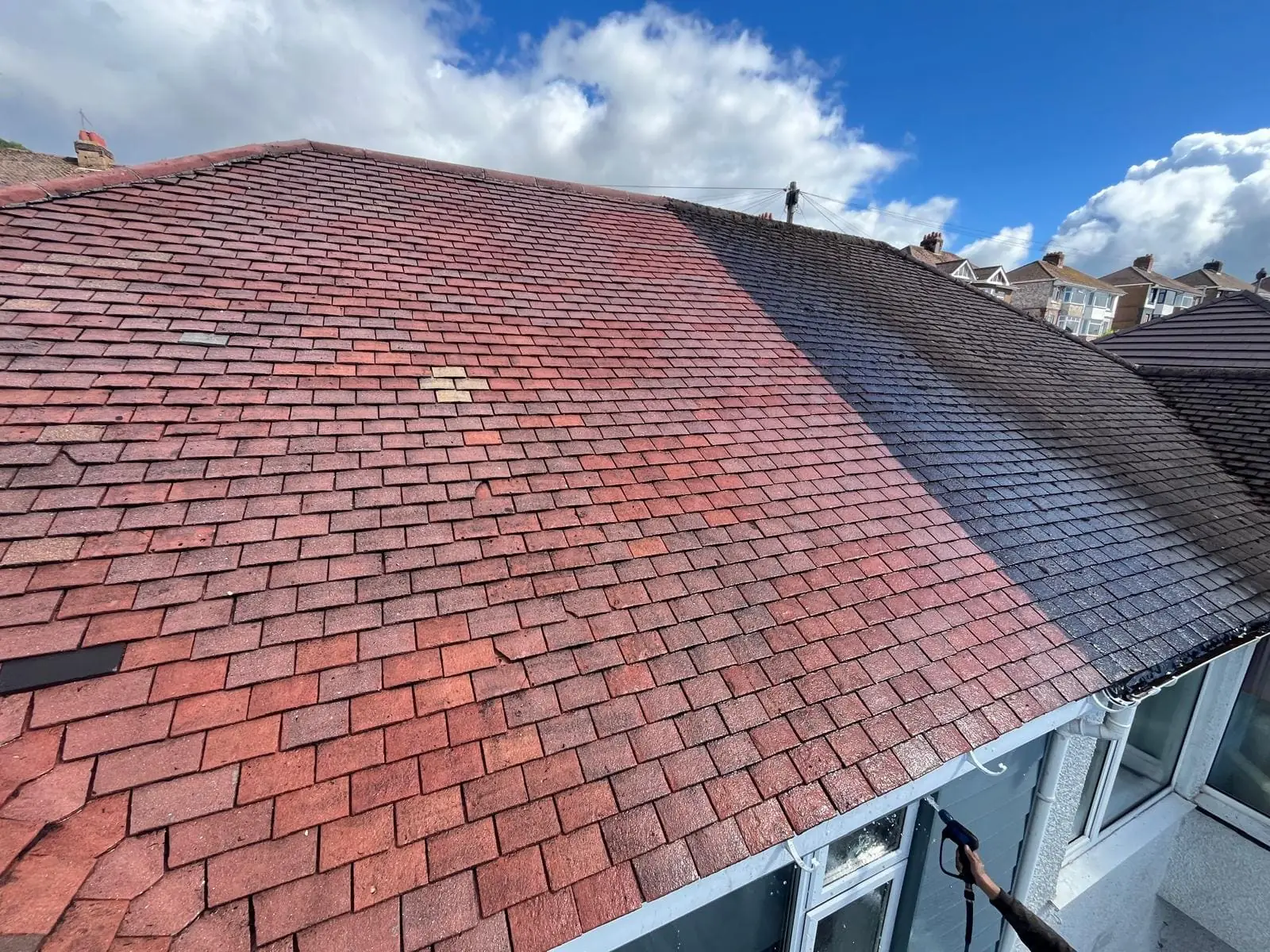
Unlike driveway cleaning, roof cleaning should never use high-pressure water directly on tiles. High pressure can damage tile surfaces, strip protective coatings, and force water under the tile overlap. Instead, professional roof cleaners use low-pressure systems that gently flush remaining debris and algae from the surface.
Step 4: Biocide Treatment
After cleaning, a professional-grade biocide is applied to the entire roof surface. This treatment kills remaining microscopic organisms, penetrates into tile pores to address embedded growth, and leaves a residual barrier that inhibits regrowth for 12-24 months. The biocide continues working for weeks after application as rainwater activates it repeatedly.
Step 5: Gutter and Valley Clearance
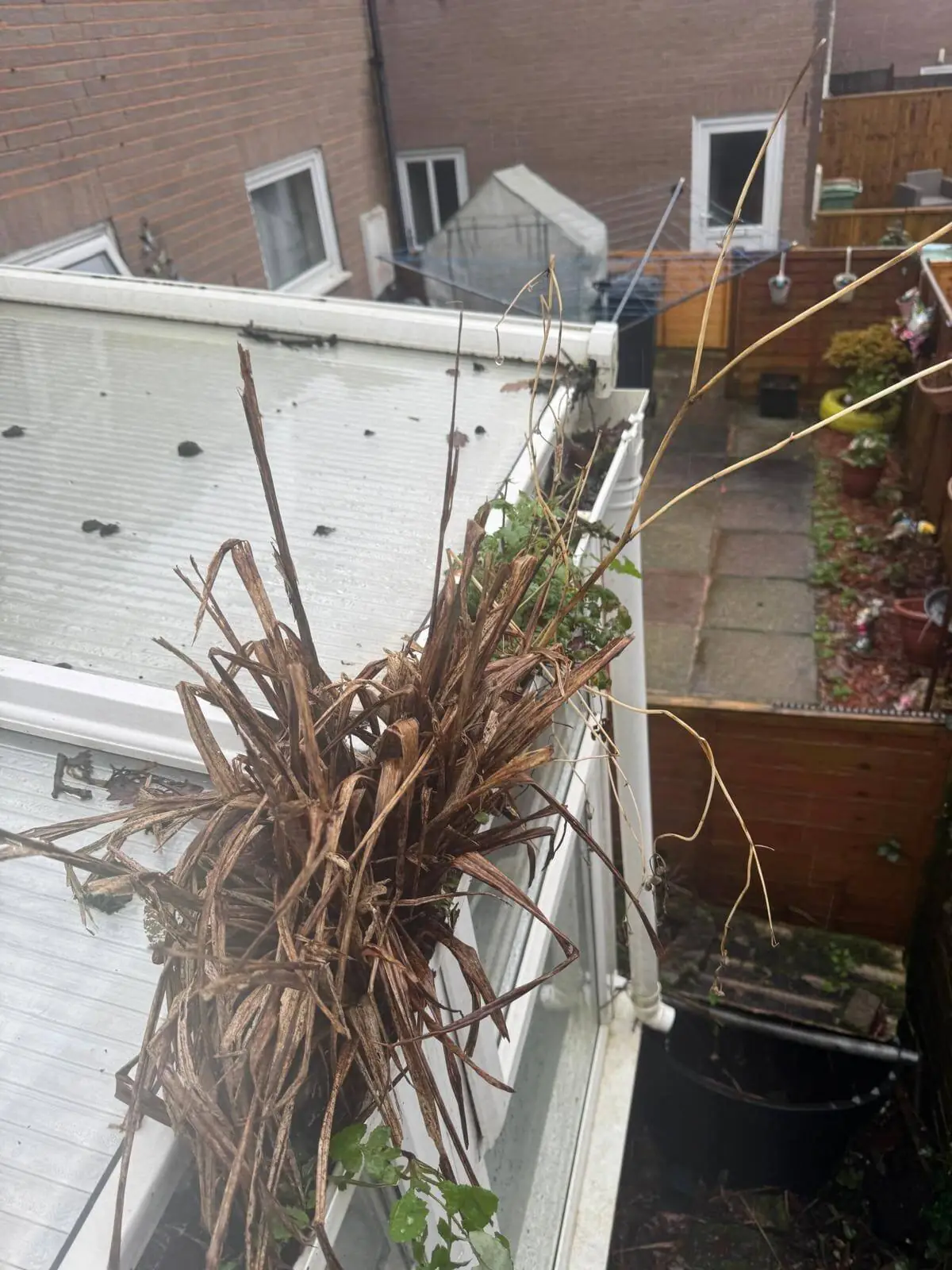
The cleaning process inevitably washes debris into gutters and valleys. A thorough professional service includes clearing all gutters, downpipes, and valley sections to ensure proper drainage. Blocked gutters after roof cleaning would simply redirect the problem from the roof to the walls and foundations.
How Often Should You Clean Your Roof in Devon and Cornwall?
Based on our experience cleaning hundreds of roofs across Plymouth, Devon, and Cornwall, we recommend the following schedule:
Standard properties: Every 3-5 years for a full clean, with a biocide top-up application every 18-24 months between cleans. This schedule keeps moss growth manageable and prevents significant buildup.
Properties near trees: Every 2-3 years. Tree debris accelerates organic growth by providing nutrients and maintaining moisture. Properties in wooded areas of Tavistock, Cornwood, and the Plym Valley are particularly affected.
North-facing roofs: Every 2-3 years. North-facing roof pitches receive less direct sunlight, meaning they stay damp longer and develop moss faster than south-facing pitches. Some properties only need the north face cleaned while the south face remains relatively clear.
Coastal properties: Every 3-4 years, but with annual inspections. Salt spray and wind-driven moisture create unique conditions that can cause rapid deterioration if organic growth gets established.
Softwashing: An Alternative Approach
For certain roof types — particularly those with delicate or older tiles — softwashing offers an excellent alternative to traditional mechanical cleaning. Softwashing uses specially formulated, biodegradable cleaning solutions applied at very low pressure.
The solution kills organic growth at the root level, and over the following weeks and months, dead moss and algae are naturally washed away by rainfall. This method is gentler on tiles and particularly effective for listed buildings, thatched properties (for the surrounding areas), and roofs with fragile or irreplaceable historic tiles.
DIY Roof Cleaning: Why We Advise Against It
While we encourage homeowners to maintain their driveways and patios themselves between professional cleans, we strongly advise against DIY roof cleaning for several important reasons:
Safety: Working at height is inherently dangerous. Falls from roofs are one of the most common causes of serious injury in domestic settings. Professional cleaners use proper access equipment, safety harnesses, and are trained in working at height regulations.
Tile damage: Walking on roof tiles — especially wet, moss-covered tiles — risks cracking them underfoot. Professional cleaners know which tiles can bear weight, where to step, and how to distribute their weight safely. One careless step can crack a tile that then costs £50-£80 to replace.
Incorrect methods: Using a domestic pressure washer on roof tiles almost always causes damage. The pressure is either too high (damaging the tile surface) or too low (not effectively cleaning). The lance angle can force water under tile overlaps, causing interior leaks.
Chemical misuse: Household bleach and generic moss killers can damage tiles, kill surrounding plants, and contaminate rainwater drainage systems. Professional biocides are specifically formulated for roof application and are environmentally responsible.
Protecting Your Investment
Your roof is one of the most expensive components of your property, yet it's often the most neglected. In the challenging climate of Devon and Cornwall, regular professional roof cleaning is the single most cost-effective thing you can do to protect this investment.
A well-maintained roof not only protects your home from the elements — it maintains your property's value, reduces energy costs through proper insulation performance, and gives you peace of mind that you won't face unexpected repair bills.
Get Your Roof Assessed for Free
If you're not sure when your roof was last cleaned — or if you've noticed moss, lichen, or algae growth — we offer free, no-obligation roof assessments across Plymouth, Devon, and Cornwall. We'll inspect your roof, explain what we find, and provide an honest recommendation on whether cleaning is needed now or can wait.
With 9 years of experience and over 109 five-star Google reviews, Scrub & Shine Southwest is the trusted choice for professional roof cleaning across the South West. Contact us today for your free assessment.
Need Professional Help?
Get a free, no-obligation quote from our experienced team. We cover Plymouth, Devon, and Cornwall.