In this article
Scroll through for expert advice, practical tips, and actionable guidance from our experienced team.
Gutters are one of those parts of your home that you rarely think about — until something goes wrong. A blocked or damaged gutter can cause water to overflow, saturate walls, damage foundations, and even lead to internal damp. Yet despite their critical role in protecting your property, gutters are among the most neglected maintenance items for UK homeowners.
In this comprehensive guide, we'll cover everything you need to know about gutter maintenance: why it matters, how often to do it, what can go wrong, and when to call in the professionals. If you're a homeowner in Plymouth, Devon, Cornwall, or anywhere in the South West, this guide is specifically tailored to the challenges our climate presents.
Why Gutter Maintenance Is So Important
Your guttering system has one job: to collect rainwater from your roof and channel it safely away from your property through downpipes and into drainage systems. When gutters become blocked, damaged, or misaligned, water spills over the edges and runs down your walls, into your foundations, and potentially into your home.
The consequences of gutter neglect can be surprisingly severe and expensive:
Wall damage and damp: Overflowing gutters saturate exterior walls, leading to damp penetration. In rendered properties — extremely common across Devon and Cornwall — this causes unsightly staining, algae growth, and eventual render deterioration. Internal damp follows, bringing with it mould growth that affects air quality and health.
Foundation damage: Water cascading from blocked gutters pools at the base of walls, saturating the ground around your foundations. Over time, this can cause subsidence, cracking, and structural movement — particularly in properties built on clay soils, which expand and contract significantly with moisture changes.
Fascia and soffit rot: When gutters overflow, water backs up behind the gutter and saturates the timber fascia boards to which the gutters are fixed. Sustained moisture exposure causes timber rot, which weakens the fascia, loosens the gutter fixings, and creates entry points for pests.
Roof damage: In severe cases, blocked gutters cause water to back up under the bottom row of roof tiles, saturating the roofing felt and timber battens. This can lead to rot in the roof structure itself — one of the most expensive repairs a homeowner can face.
Pest infestations: Blocked gutters full of decomposing leaves and debris create warm, moist habitats that attract insects, birds (particularly pigeons and starlings), and even rodents. Bird nesting material further blocks the gutter, creating a compounding problem.
How Often Should You Clean Your Gutters?
For most UK properties, we recommend gutter cleaning at least twice per year: once in late autumn (November-December) after the majority of leaves have fallen, and once in spring (March-April) to clear any winter debris and check for damage.
However, some properties require more frequent attention:
Properties near trees: If your property has mature trees within 10 metres, you may need gutter cleaning three or even four times per year. Oak, beech, and sycamore are particularly problematic because they shed large volumes of leaves over an extended period. Pine trees drop needles year-round, which are especially troublesome because they're small enough to enter downpipe openings and cause blockages deep within the drainage system.
Properties in wooded areas: Homes in areas like Tavistock, Cornwood, Bere Alston, and the wooded valleys around Plymouth face constant leaf and debris accumulation. Quarterly cleaning is often necessary.
Properties with flat or low-pitch roofs: These roofs drain water more slowly, giving debris more time to accumulate in gutters. They also tend to collect moss and algae growth that washes into gutters during rain.
Older properties with original cast iron guttering: Cast iron gutters are heavier and more susceptible to joint failure when loaded with debris. They also rust when in constant contact with damp organic matter. Regular cleaning is essential to preserve original cast iron guttering.
Signs Your Gutters Need Immediate Attention
Between scheduled cleaning visits, watch for these warning signs that indicate your gutters need attention:
Water overflowing during rain: The most obvious sign. If you see water cascading over the edge of your gutter during rainfall, there's a blockage, a misalignment, or the gutter capacity is exceeded. Stand outside during moderate rain and observe — you'll quickly spot any overflow points.
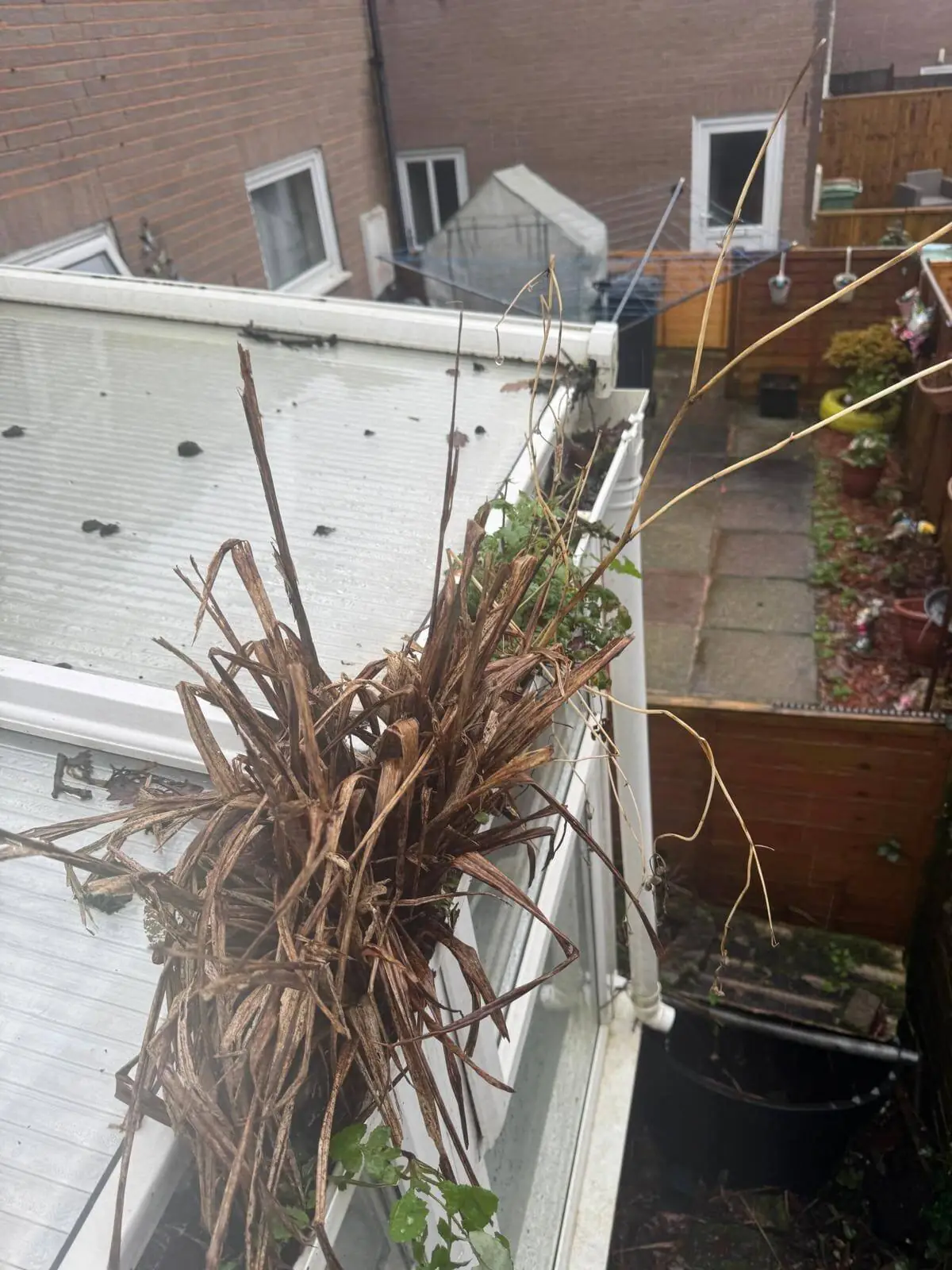
Plants growing in gutters: If you can see grass, weeds, or even small saplings growing from your gutters, there's a significant accumulation of decomposed organic matter providing a growing medium. This represents a serious blockage that needs immediate clearing.
Staining on exterior walls: Vertical streaks of green or dark discolouration running down your walls beneath gutter sections indicate persistent overflow. The water carries algae spores and dirt down the wall surface, creating stains that require wall cleaning to remove.
Sagging gutters: Gutters that visibly dip or sag between brackets are carrying excess weight — either from accumulated debris, standing water, or both. Sagging sections need clearing immediately and may need new brackets to restore proper alignment and fall.
Damp patches on interior walls: If you notice damp patches on interior walls near the roofline, overflowing gutters may be the cause. The sooner this is addressed, the less damage occurs to internal decorations and plasterwork.
Common Gutter Problems in the South West
Our South West climate creates several specific challenges for gutter maintenance:
Heavy moss accumulation: Devon and Cornwall's wet climate encourages prolific moss growth on roofs. During heavy rain, moss fragments wash off the roof and into gutters, where they accumulate and form dense, water-retentive blockages. Properties with moss-covered roofs often experience gutter blockages within months of cleaning — which is why we recommend combining roof cleaning with gutter maintenance for long-lasting results.
High rainfall volume: Plymouth receives approximately 1,000mm of annual rainfall — about 30% more than the UK average. This means gutters work harder and more frequently, making proper capacity and alignment critically important. Even small blockages or misalignments that might go unnoticed in drier regions cause problems here.
Storm damage: The South West is exposed to Atlantic weather systems that bring strong winds and heavy rain. Storms can dislodge gutter sections, break brackets, and deposit large amounts of debris in a single event. After significant storms, it's worth visually checking your gutters for damage.
Coastal salt and mineral deposits: Properties near the coast in areas like Wembury, Downderry, Torpoint, and Kingsbridge experience salt spray that corrodes metal gutter components and creates mineral deposits that restrict water flow. Galvanised steel and cast iron guttering are particularly susceptible.
Gutter Cleaning Methods
Professional gutter cleaning typically uses one of several methods, each suited to different situations:
Vacuum Gutter Cleaning
The most common professional method uses a high-powered vacuum system with telescopic carbon fibre poles reaching up to 12 metres. A camera attachment allows the operator to see inside the gutter from ground level, ensuring thorough clearing without the need for ladders.
This method is safe (no working at height), efficient, and effective for removing dry and semi-dry debris. It's the go-to method for routine maintenance on standard residential properties.
Manual Clearing with Ladders
For heavily blocked gutters, compacted debris, or gutters that need inspection and repair, manual clearing from ladders may be necessary. This allows the operative to physically remove blockages, check joint seals, test bracket security, and flush the system with water to confirm free flow.
Manual clearing provides the most thorough clean but requires proper ladder safety procedures and is typically more time-intensive.
Pressure Flushing
After debris removal, some professionals flush the entire gutter system with water under pressure to clear remaining sediment and confirm that downpipes and underground drainage are flowing freely. This step identifies hidden blockages in downpipe bends and underground connections that aren't visible from above.
Gutter Guards: Are They Worth It?
Gutter guards — mesh, brush, or foam inserts designed to prevent debris entering gutters — are frequently marketed as a solution to gutter maintenance. In our experience, they reduce the frequency of required cleaning but don't eliminate it entirely.
Pros: Gutter guards prevent large debris (leaves, twigs, bird nesting material) from entering the gutter. This significantly reduces blockage frequency, particularly for properties near deciduous trees.
Cons: Fine debris (moss fragments, silt, pine needles, roof granules) still passes through most guard systems and accumulates in the gutter over time. In some cases, guards actually make cleaning more difficult because they need to be removed, the gutter cleaned, and the guards refitted. Brush-type guards can trap debris on top, creating a dam that diverts water over the gutter edge.
Our recommendation: gutter guards are a useful addition for properties with heavy tree coverage, but they should be viewed as a supplement to — not a replacement for — regular professional cleaning.
When Gutters Need Repair or Replacement
During professional gutter cleaning, your operative should identify any damage that requires repair. Common issues include:
Leaking joints: UPVC gutter joints have rubber seals that perish over time, causing leaks. These are usually straightforward to repair by replacing the seal or joint section.
Broken brackets: Gutter brackets can crack, corrode, or pull away from the fascia board. Broken brackets cause sagging and eventual gutter detachment. Replacement brackets are inexpensive, but fitting them requires ladder access.
Cracked or split guttering: Impact damage, frost damage, or age-related brittleness can crack UPVC guttering. Small cracks can sometimes be sealed, but significant damage requires section replacement.
Incorrect fall: Gutters must slope slightly towards downpipes to ensure water flows correctly. Over time, bracket failure or settling can alter the fall, causing standing water in certain sections. Standing water accelerates deterioration and adds weight that stresses remaining brackets. Professional gutter repair can restore proper alignment.
Rust (cast iron/steel guttering): Metal guttering requires periodic painting or treatment to prevent rust. Once rust establishes, it spreads rapidly and eventually perforates the metal. Early treatment saves the gutter; advanced rust requires replacement.
DIY Gutter Maintenance Tips
While we recommend professional cleaning for a thorough job (especially for two-storey properties where ladder safety is crucial), there are maintenance tasks you can safely do yourself:
Visual inspections: Regularly look up at your gutters, particularly after storms. Check for sagging, overflow stains on walls, and visible plant growth. You can do this from the ground with binoculars if needed.
Ground-level debris management: Keep the area around downpipe outlets clear. Ensure ground-level drainage grates aren't blocked with leaves or dirt. Check that water flows freely away from the building when it exits the downpipe.
Single-storey gutter clearing: If you're comfortable working from a stable ladder on a single-storey section, you can clear accessible gutters by hand. Always use a proper ladder on firm, level ground, have someone hold the ladder base, and never overreach. Use a gutter scoop or trowel to remove debris, then flush with a garden hose.
Downpipe testing: During rain, check that all downpipes are flowing freely. A downpipe that drips rather than flows steadily has a partial blockage that will worsen over time. You can sometimes clear downpipe blockages by pushing a drain rod or stiff wire down from the top.
The Cost of Gutter Cleaning in Plymouth and the South West
Professional gutter cleaning for a standard three-bedroom house in Plymouth typically costs between £75 and £150, depending on the property size, accessibility, and severity of blockages. Larger properties, bungalows with extensive roof perimeters, and multi-storey buildings cost more.
Many cleaning companies — including Scrub & Shine Southwest — offer bundle discounts when you combine gutter cleaning with other services such as roof cleaning, driveway cleaning, or window cleaning. These packages typically offer savings of 10-20% compared to booking each service separately.
Consider the cost of gutter cleaning against the potential cost of damage: interior damp remediation (£500-£5,000), fascia replacement (£500-£2,000), foundation repair (£5,000-£20,000+), and render replacement (£5,000-£15,000). Regular gutter maintenance is one of the most cost-effective things you can do to protect your property.
Creating a Gutter Maintenance Schedule
The simplest way to stay on top of gutter maintenance is to create a schedule:
November/December: Schedule your primary annual gutter clean after autumn leaf fall. This is the most important clean of the year, clearing the bulk of debris before winter rains arrive.
March/April: Schedule a secondary clean to remove winter debris and check for storm damage. This is also the ideal time to combine gutter cleaning with spring exterior cleaning.
After major storms: Visually inspect gutters from the ground. If you notice overflow, sagging, or detachment, arrange professional attention promptly.
Quarterly (if near trees): Properties with significant tree coverage benefit from quarterly cleaning to prevent the accumulation that causes blockages and damage.
Get Your Gutters Inspected for Free
Not sure what condition your gutters are in? We offer free gutter inspections across Plymouth, Devon, and Cornwall using camera-equipped telescopic systems that show you exactly what's happening inside your gutters without anyone needing to climb a ladder.
With 9 years of experience and over 109 five-star reviews, Scrub & Shine Southwest provides thorough, professional gutter cleaning and maintenance services across the South West. Contact us today to book your free inspection.
Need Professional Help?
Get a free, no-obligation quote from our experienced team. We cover Plymouth, Devon, and Cornwall.